Why Are Smart Restaurants Switching to AI for Order Management?

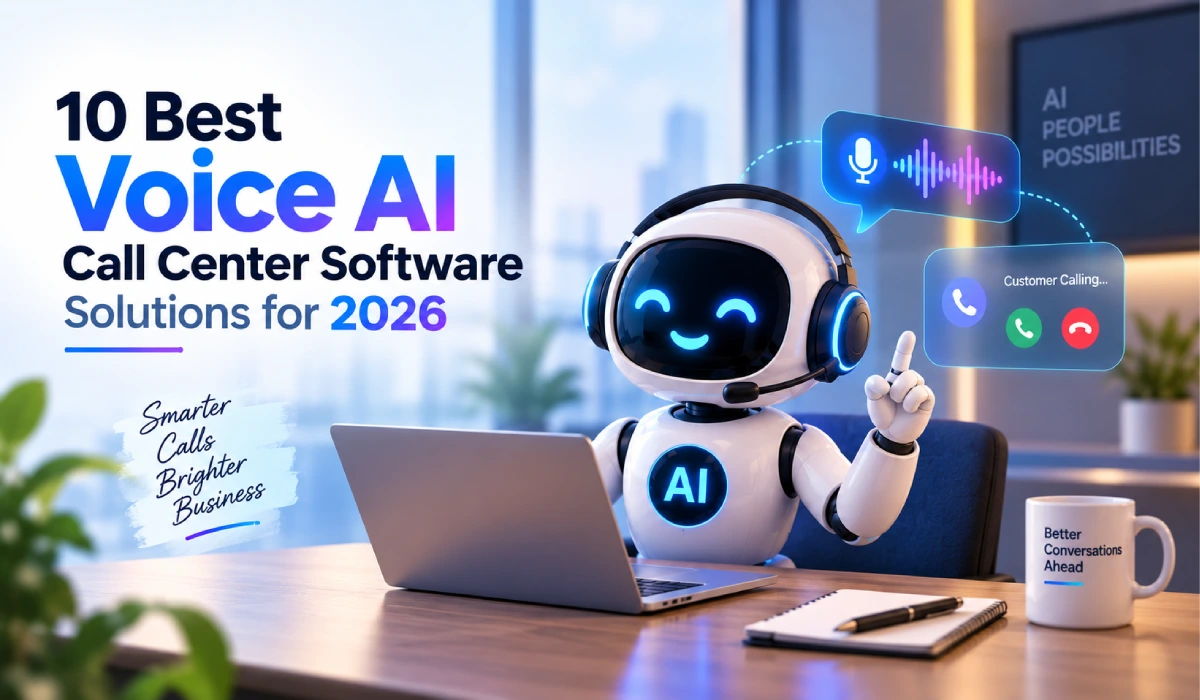
Voice AI is quickly moving from an experimental customer-service feature to a core part of call center automation.
Gartner reports that 44% of customer service leaders were exploring customer-facing GenAI voicebots, while another 11% were already piloting them. At the same time, the global call center AI market is projected to grow from about $2.9 billion in 2026 to $7.1 billion by 2030, reflecting a 23.8% CAGR.
That growth makes choosing the right Best Voice AI Call Center Software Solutions more important than simply adding an AI chatbot to your phone system. The right AI Voice Agent Platform can handle inbound and outbound calls, qualify leads, book appointments, route conversations, provide call transcription and summaries, and hand complex interactions to human agents.
But which platforms actually stand out in 2026? This guide compares 10 leading solutions to help you find the right fit for your call volume, workflows, integrations, and customer experience goals.
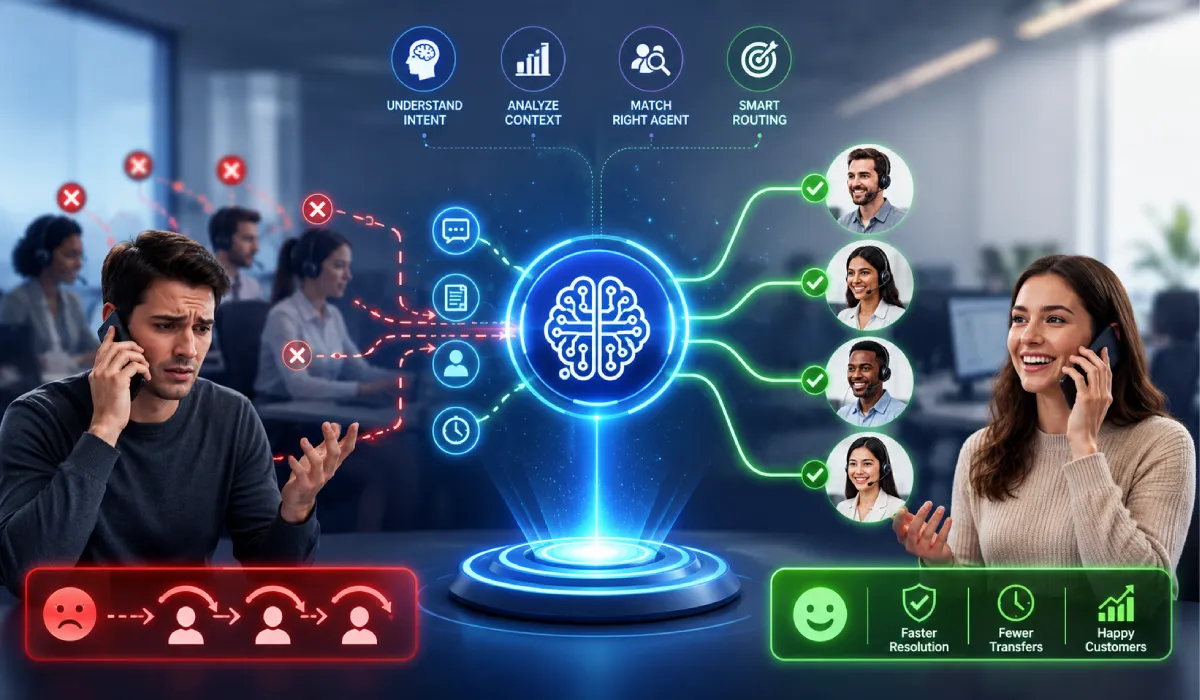
Voice AI call center software uses AI voice agents, speech recognition, natural language processing, and text-to-speech technology to automate phone-based customer interactions.
Instead of relying entirely on human agents, businesses can use an AI-powered call center to answer questions, make automated phone calls, qualify leads, schedule appointments, route calls, and provide support in real time.
Modern AI Call Center Software goes beyond & can understand conversational language, respond naturally, access customer information, generate call summaries, perform sentiment analysis, and trigger a human agent handoff when necessary.
Depending on the platform, capabilities can include:
Bizfusion AI is an AI Voice Agent Platform built for businesses that want to automate customer conversations across phone, chat, WhatsApp, and social channels. Its focus is less on providing voice infrastructure for developers and more on putting AI-powered workflows into everyday business operations, including lead qualification, customer support, appointment scheduling, reminders, and follow-ups.
When to choose: Choose Bizfusion AI if your business needs an integrated AI Call Center Software solution for lead qualification, customer support, appointment management, reminders, and high-volume call automation.
When to avoid: If your primary requirement is a developer-only voice infrastructure layer where your engineering team wants to build virtually every component from the ground up, a developer-first platform may be a better fit.
Retell AI is focused specifically on building, testing, deploying, and monitoring production-ready AI phone agents. This AI call solution platform puts phone conversations at the center of its product, supporting both inbound support and outbound sales from the same platform.
When to choose: Choose Retell AI when you need production-grade AI phone agents and want a balance between visual agent building and API-level control.
When to avoid: It may not be the ideal choice if you want a complete traditional CCaaS suite covering every aspect of workforce and contact-center management.
PolyAI stands out for its voice-first approach to complex customer-service conversations. Rather than simply replacing menu-driven IVR, its platform is designed to understand how customers naturally speak, including long or unpredictable requests.
Its use cases include authentication, billing and payments, reservations, troubleshooting, order management, and intelligent call routing.
When to choose: Choose PolyAI when customer experience and natural conversation quality matter more than simply automating basic scripted calls.
When to avoid: It may be excessive for a small business that only needs straightforward outbound reminders or simple appointment calls.
Cognigy is positioned as an enterprise AI Contact Center Software and agent-orchestration platform rather than simply a voice bot. Its AI agents can operate across phone, messaging, and other channels while connecting to existing contact-center and enterprise systems.
When to choose: Choose Cognigy if you are an enterprise looking for multilingual Voice AI and deep integration with an existing contact-center ecosystem.
When to avoid: It is unlikely to be the most practical option for a small company looking for a lightweight AI receptionist or basic outbound calling tool.
Synthflow differentiates itself through its no-code approach to AI voice agents. It is designed to let businesses build, evaluate, deploy, and improve voice workflows without requiring a traditional engineering-heavy implementation.
When to choose: Choose Synthflow when you want to build and deploy AI Calling Agent Software quickly without developing your own voice infrastructure.
When to avoid: Developers who want granular control over the underlying voice stack may prefer a developer-first platform such as Vapi.
Talkdesk is more than a standalone voice bot. Its AI Contact Center Software combines AI agents, voice and digital channels, customer data, workflows, and human-agent collaboration. Its Autopilot capability is designed to resolve customer requests across voice and digital channels.
When to choose: Choose Talkdesk if you want an established contact-center environment where Voice AI for Customer Service works alongside digital channels, human agents, data, and back-office workflows.
When to avoid: It may be more platform than you need if your only objective is deploying one or two simple AI phone agents.
Five9 has taken a distinctly agentic AI approach to voice automation. Its latest Voice AI Agents are designed to respond to customers through multi-step requests, use enterprise systems to take actions, and escalate to human agents with context intact.
Its architecture combines an orchestrator with specialized agents for tasks such as authentication, data retrieval, and actions across business systems.
When to choose: Choose Five9 if you are a large organization looking for enterprise-grade AI Call Center Solutions with governance, complex automation, and unified AI-human operations.
When to avoid: Smaller businesses with straightforward call automation requirements may find Five9's broader enterprise ecosystem unnecessary.
Vapi is a developer platform that provides the infrastructure needed to build voice agents while giving developers control over the application logic, integrations, and workflows. It supports inbound and outbound calls, external APIs, appointment scheduling, customer support, and other custom use cases.
When to choose: Choose Vapi if you want maximum flexibility to build custom Voice AI Call Center Software or embedded voice applications.
When to avoid: Non-technical businesses looking for a largely ready-to-deploy call center solution may prefer a more managed platform.
Bland helps with automated phone operations and supports inbound and outbound calls, large batches of simultaneous calls, live API actions, custom AI personas, and existing telephony infrastructure.
When to choose: Choose Bland when your priority is scalable Voice AI Outbound Call Management, automated operations, and direct control over telephony.
When to avoid: Businesses primarily seeking a full enterprise contact-center suite with extensive workforce-management capabilities may need a broader platform.
ElevenLabs is particularly strong when the voice itself is a critical part of the customer experience. Its Conversational AI platform now connects with enterprise telephony providers and SIP infrastructure, allowing AI agents to handle inbound and outbound calls through existing phone systems.
When to choose: Choose ElevenLabs when highly natural voice quality and flexible conversational voice deployment are important.
When to avoid: If you need extensive native workforce management, contact-center administration, or a complete business call-center ecosystem, a dedicated CCaaS platform may be a better fit.
The best Voice AI Call Center Software depends on your priorities, enterprise-scale automation, natural AI voice agents, developer flexibility, multilingual support, or high-volume calling.
While platforms like Cognigy, Five9, and Talkdesk suit complex enterprise environments, solutions such as Bizfusion AI can be a practical choice for businesses looking to bring AI Call Center Software, Voice AI for Inbound and Outbound Call Centers, appointment handling, and customer communication into everyday operations.
If you're ready to explore what Voice AI can do for your business, Bizfusion AI offers a simple way to start automating calls and customer interactions.
Book a demo to see how it can fit your workflows.
AI voice agents provide 24/7 availability, faster response times, lower call-handling costs, scalable call center automation, automated lead qualification, appointment booking, call transcription, and consistent Voice AI for Customer Service.
Yes. Modern Voice AI for Inbound and Outbound Call Centers can answer incoming calls, make automated follow-ups, qualify leads, confirm appointments, collect information, and transfer complex conversations to human agents.
Healthcare, real estate, e-commerce, banking, hospitality, education, travel, logistics, SaaS, and service businesses can benefit from AI Call Center Software, particularly those managing repetitive interactions or high call volumes.
Yes. Many modern AI Voice Agent Platforms support multilingual conversations using speech recognition and natural language processing. The number of supported languages varies by provider, making MULTILINGUAL VOICE AI especially useful for businesses serving diverse customer bases.
Recent Posts