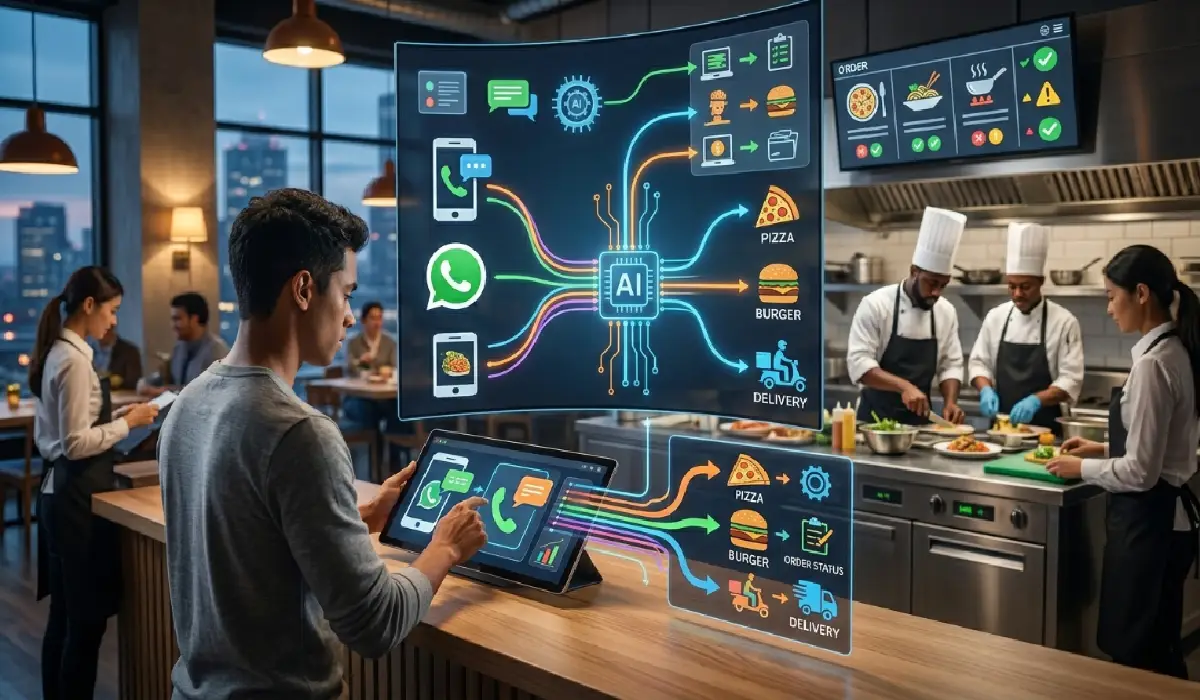
Why Are Smart Restaurants Switching to AI for Order Management?
AI call routing works by understanding customer intent, urgency, context, and agent skills in real time, then connecting each caller to the right team faster. Unlike traditional IVR, AI-Powered Call Routing uses intent-based routing, skills-based routing AI, and smart call distribution to reduce wait times, avoid wrong transfers, and improve customer support experiences.
Nobody likes being transferred from one agent to another while having to explain the same problem repeatedly. Yet that remains the reality for many businesses using outdated IVR systems. Long hold times, wrong transfers, and frustrating menu options quietly damage customer trust every single day.
In fact, according to the Capgemini Research Report, 41% of customers say frequent call transfers are among the most frustrating parts of customer support.
This is why businesses are shifting toward AI-powered call routing. Instead of sending customers in circles, AI understands intent, urgency, and context in real time to connect callers with the right agent instantly, creating faster resolutions, fewer transfers, and a far better customer experience
In this blog, we’ll break down how AI-driven order management actually works, what it looks like in real restaurant environments, and how it helps bring structure to what often feels like controlled chaos.
AI call routing is an intelligent system that automatically directs customer calls to the most suitable agent or department based on the caller’s intent, urgency, conversation context, and support needs.
Unlike traditional IVR systems that rely on fixed menu options, Intelligent Call Routing uses AI, natural language processing (NLP), and real-time data analysis to understand what the customer actually needs.
Instead of making customers navigate endless menus or repeat themselves multiple times, AI-Powered Call Routing identifies the issue instantly and connects them to the right person faster. This creates a smoother customer experience, reduces unnecessary transfers, and improves overall support efficiency.
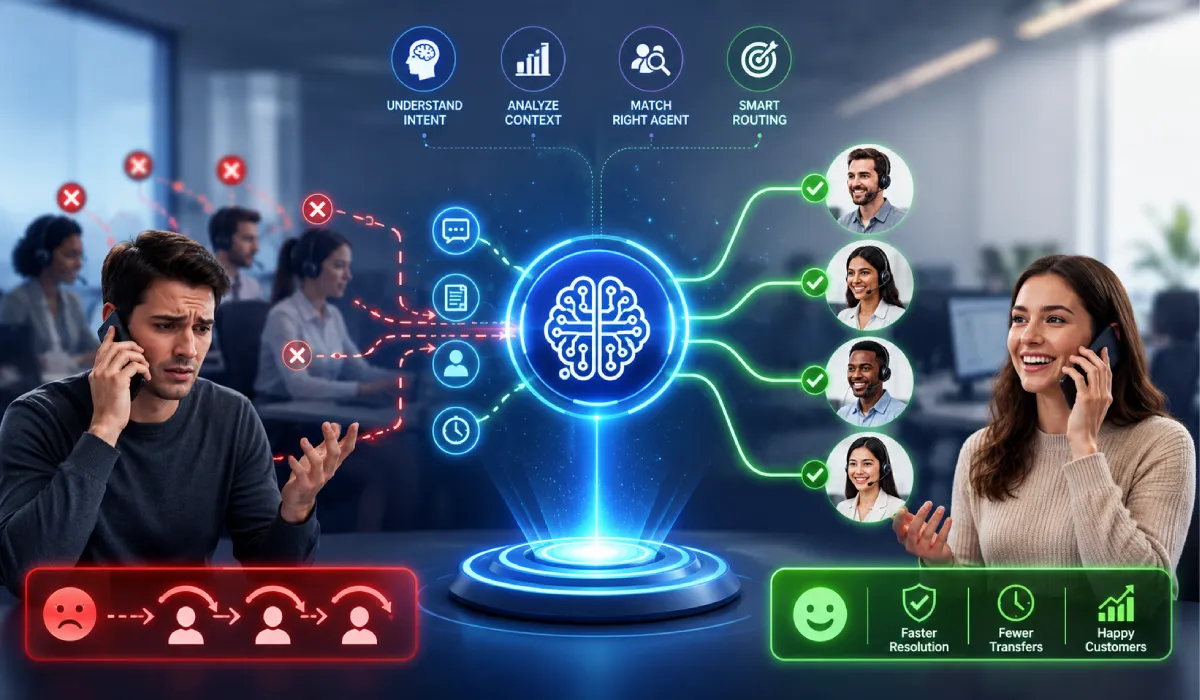
The biggest problem with traditional support systems is simple: they do not truly understand the customer. They only follow fixed menus and routing rules. But how AI call routing works in customer support is very different. Instead of sending callers through endless “Press 1” options, AI listens, understands intent, analyzes context, and connects customers to the right person faster.
The AI analyzes what the customer is saying in real time using voice recognition and natural language processing. It identifies whether the caller needs billing support, technical help, booking assistance, or urgent escalation. This is known as intent-based routing.
The system checks customer history, previous interactions, CRM details, and priority level to better understand the situation. Returning customers or urgent cases can automatically move higher in the queue.
Once the issue is identified, the AI finds the best available agent based on expertise, department, language, and availability. This is where skills-based routing AI improves first-call resolution and reduces unnecessary transfers.
Instead of pushing every caller into the same queue, AI uses smart call distribution and Automated AI Call Routing to balance workloads, reduce wait times, and prevent agent overload.
Over time, the system learns from customer interactions and routing outcomes to improve accuracy and efficiency. This helps businesses deliver faster and more personalized support experiences with AI Customer Support.
Modern platforms like BizFusion combine Smart Call Routing, intelligent queue management, and real-time analytics to help support teams reduce delays, improve routing accuracy, and create smoother customer experiences without adding operational complexity.
Traditional IVR routing works through fixed menu options where customers press numbers to reach a department. It can handle basic call direction, but it often becomes frustrating when customers have complex issues, urgent needs, or unclear menu choices.
Smart AI Call Routing, on the other hand, understands what the customer is saying, detects intent, checks context, and routes the call to the most suitable agent in real time.
Compare how AI-powered routing improves customer experience, reduces wait time, and intelligently connects callers with the right department.
| Difference Point | Traditional IVR Routing | Smart AI Call Routing |
|---|---|---|
| How it works | Uses fixed “Press 1, Press 2” menus | Uses intent-based routing to understand why the customer is calling |
| Customer experience | Can feel slow, repetitive, and frustrating | Feels faster, smoother, and more personalized |
| Routing accuracy | Depends on the customer choosing the right option | Uses Intelligent Call Routing to match callers with the right team |
| Agent matching | Sends calls to departments, not always to the right person | Uses skills-based routing AI to connect callers with qualified agents |
| Queue management | Usually follows basic call order | Uses smart call distribution and load balancing to reduce wait times |
| Flexibility | Works on fixed rules and limited options | Adapts based on urgency, context, availability, and customer history |
| Call transfers | Higher chances of wrong routing and repeat transfers | Reduces unnecessary transfers with AI-Powered Call Routing |
| Business value | Suitable for simple call flows | Better for modern Customer Call Management and AI Customer Support |
| Analytics | Limited visibility into routing performance | Provides real-time insights for Call Center Automation and optimization |
Customers rarely complain about calling support. They complain about waiting too long, getting transferred repeatedly, or explaining the same issue again and again. This is why businesses are rapidly adopting AI-Powered Call Routing to create faster and more intelligent customer experiences.
One of the biggest benefits of Smart Call Routing is speed. AI instantly understands customer intent and routes calls to the right department without forcing callers through long IVR menus. If you use BizFusion, it uses real-time intent and context recognition to help businesses reduce delays and improve first-call resolution.
Traditional routing systems often send customers to the wrong team first. With skills-based routing AI and intent-based routing, it matches the calls with agents based on expertise, language, and availability. This creates smoother conversations and significantly reduces frustrating call transfers.
Modern Automated AI Call Routing systems do more than route calls. They also optimize queues dynamically. For example, intelligent queue management features like wait-time prediction, load balancing, and callback options help businesses handle peak call volumes more efficiently while improving customer satisfaction.
Customers expect support teams to already understand their issue. With AI Customer Support, businesses can use CRM history, previous conversations, and caller context to personalize interactions instantly. This creates a much more natural experience compared to rigid IVR systems, which is why many businesses are now comparing Voice AI vs Traditional Call Centres when upgrading their support operations.
When agents receive the right calls from the start, they spend less time redirecting customers and more time solving problems. Features like smart call distribution and intelligent workload balancing also prevent agent burnout by distributing calls more efficiently across teams.
Another major advantage of Call Center Automation is visibility. Businesses can monitor routing accuracy, track agent performance, and analyze call flow trends in real time. BizFusion provides live routing analytics and performance insights that help support teams continuously improve efficiency and customer experience.
As customer queries increase, manually managing support becomes difficult. Intelligent Call Routing helps businesses scale customer service operations without creating chaos, ensuring customers still reach the right team quickly even during high-volume periods.
At BizFusion, we built our AI-Powered Call Routing platform to solve one of the biggest problems in customer support: sending customers to the wrong agent.
Our platform uses intelligent intent-based routing to understand why customers are calling in real time and instantly connect them with the right team based on context, urgency, and agent expertise.
With our skills-based routing AI, businesses can reduce unnecessary transfers and improve first-call resolution by ensuring customers reach the agents who are actually qualified to help them. This creates faster conversations, shorter wait times, and a smoother customer experience.
Also, our automated AI call routing platform continuously learns from customer interactions to improve routing accuracy over time. This helps businesses scale support operations more efficiently while maintaining personalized customer experiences.
As customer expectations continue to rise, businesses can no longer rely on outdated routing systems that slow conversations down and create unnecessary friction.
Modern AI-Powered Call Routing is changing how businesses handle customer communication by making support faster, more accurate, and far more personalized.
If you are willing to change from traditional routing to modern routing and are looking for a platform to make things simple, you might want to try Bizfusion. Book your free Live demo today.
Yes, most modern AI-Powered Call Routing platforms can integrate with CRMs, helpdesks, and support tools to provide better customer context and faster resolutions.
Absolutely. Small businesses can use Smart Call Routing to reduce missed calls, improve customer experience, and manage growing support volumes more efficiently.
Yes. AI systems are designed to balance queues dynamically, distribute workloads intelligently, and reduce support bottlenecks during peak hours.
Many businesses combine Voice AI Solutions with intelligent routing to provide round-the-clock customer support and automated assistance.
Implementation time depends on business size and integrations, but many cloud-based solutions can be deployed much faster than traditional call center systems.
Businesses should look for intent recognition, real-time analytics, CRM integration, queue management, scalability, and intelligent routing accuracy.
Recent Posts