Common Restaurant Reservation Mistakes and How to Avoid Them

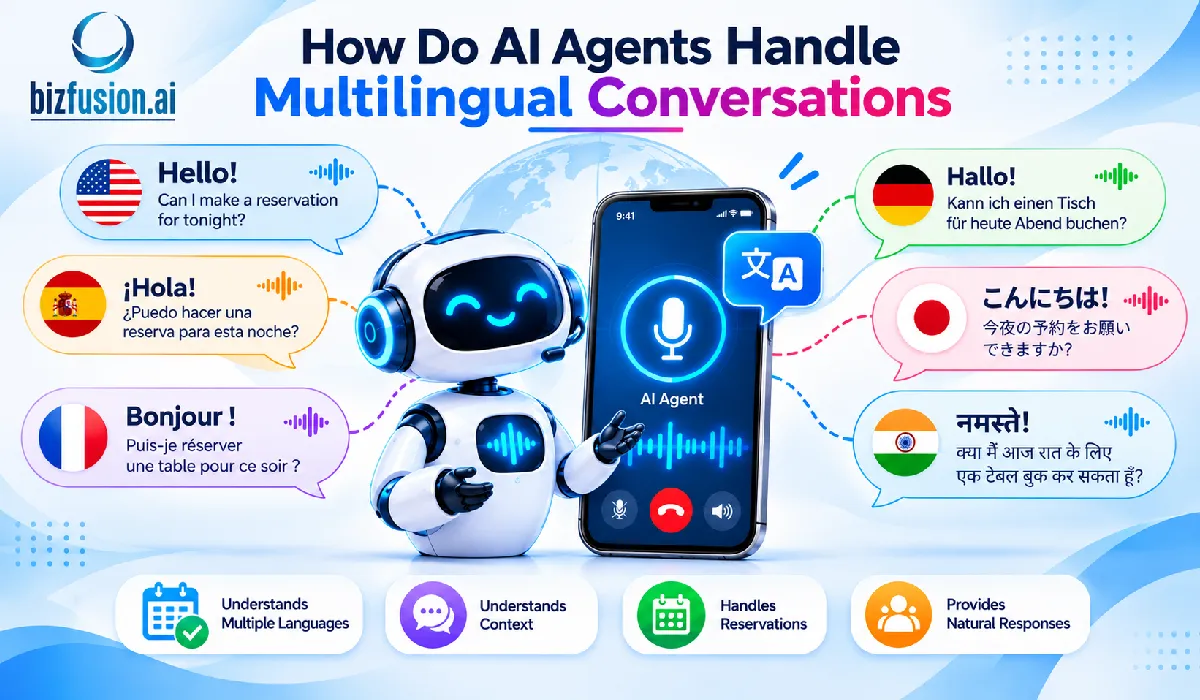
Businesses serving customers across different regions and language groups face a consistent challenge: delivering high-quality communication regardless of which language a customer uses. AI agents for multilingual conversations address this directly, combining automatic language detection, natural language processing and real-time response generation in a single system. This article explains the technology behind multilingual AI, how it handles complex language requirements and the industries where it is already being put to work.
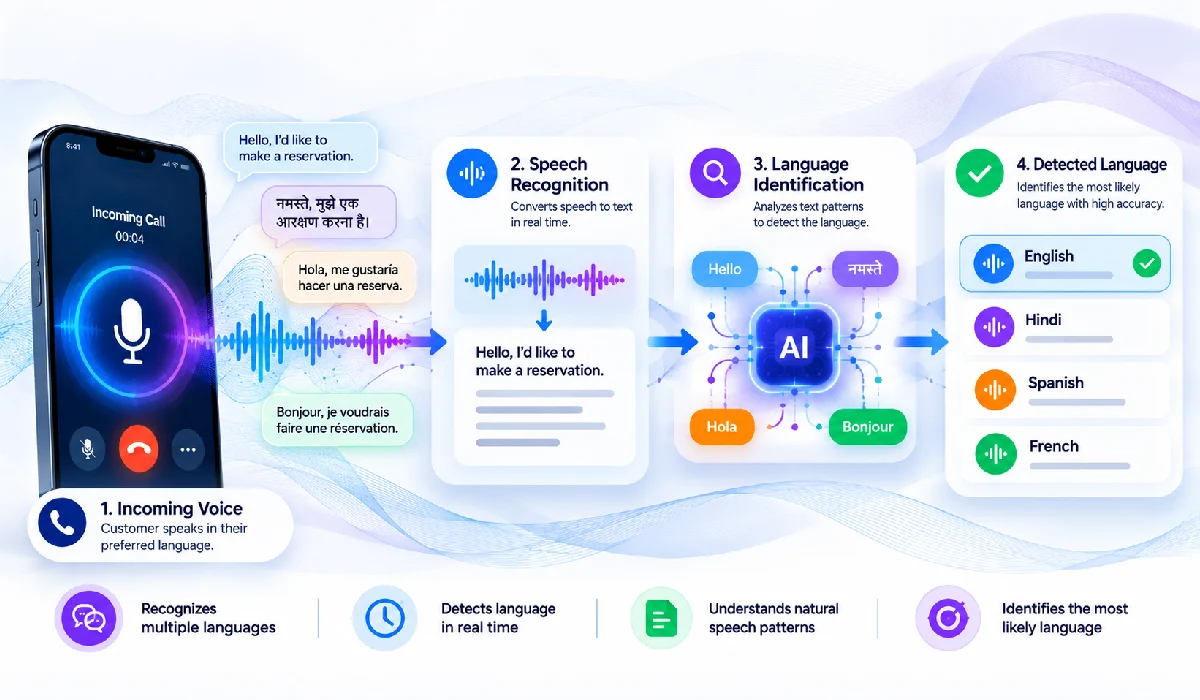
Before a Voice AI agent can respond correctly, it must first identify what language the user is communicating in. Language detection algorithms analyse incoming text or speech within milliseconds, examining character sets, vocabulary patterns and grammatical structures to make an accurate identification. In voice-based systems, phonetic patterns and acoustic features also contribute to the process. Language detection runs automatically at the start of each conversation, requiring no input from the user and typically completing before the first full sentence has been received.
Once the language is identified, the AI uses natural language processing models to interpret the meaning and intent behind the message. Multilingual NLP models are trained across many languages and handle idioms, colloquialisms, contextual ambiguity and cultural nuances that direct translation cannot capture. This is particularly important in customer service, where meaning varies significantly between languages and regions. Multilingual Voice AI extends this capability to real-time spoken interactions with equivalent accuracy.
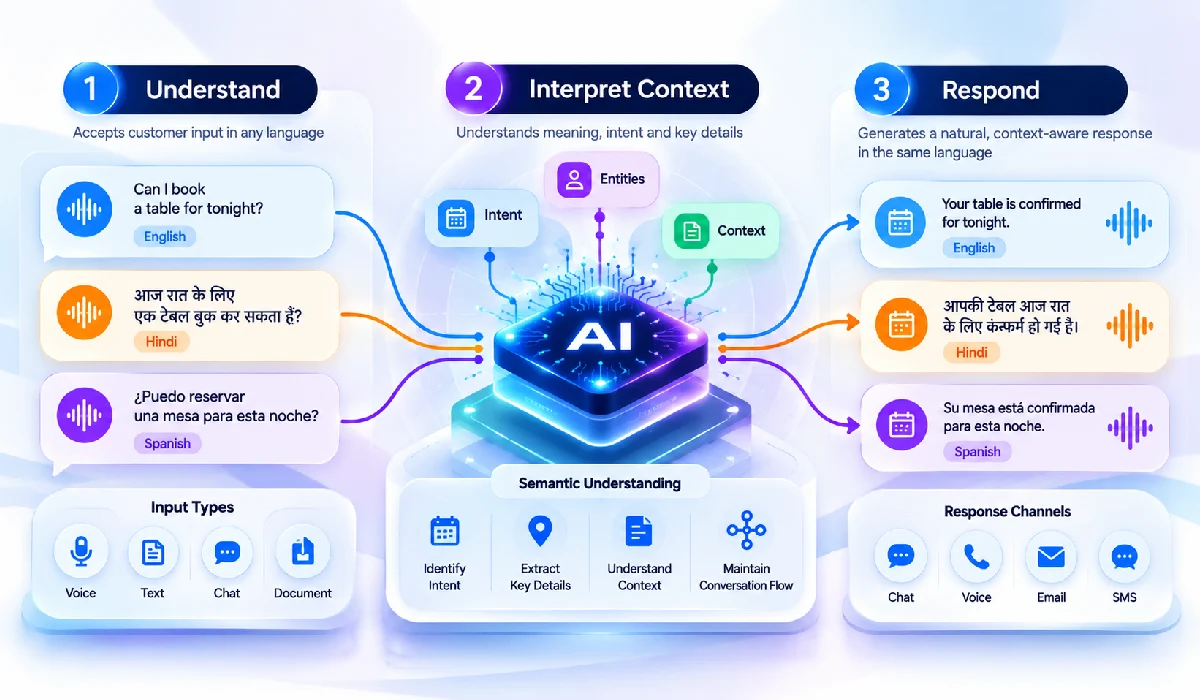
Advanced multilingual AI agents do not translate from a base language before responding. They generate responses directly in the identified language, preserving appropriate tone, formality and natural phrasing throughout the exchange. This distinction matters in customer-facing contexts, where responses that read as translated rather than natural reduce trust and engagement. AI chatbot for customer service systems use direct language generation to maintain consistent conversation quality across all supported languages.
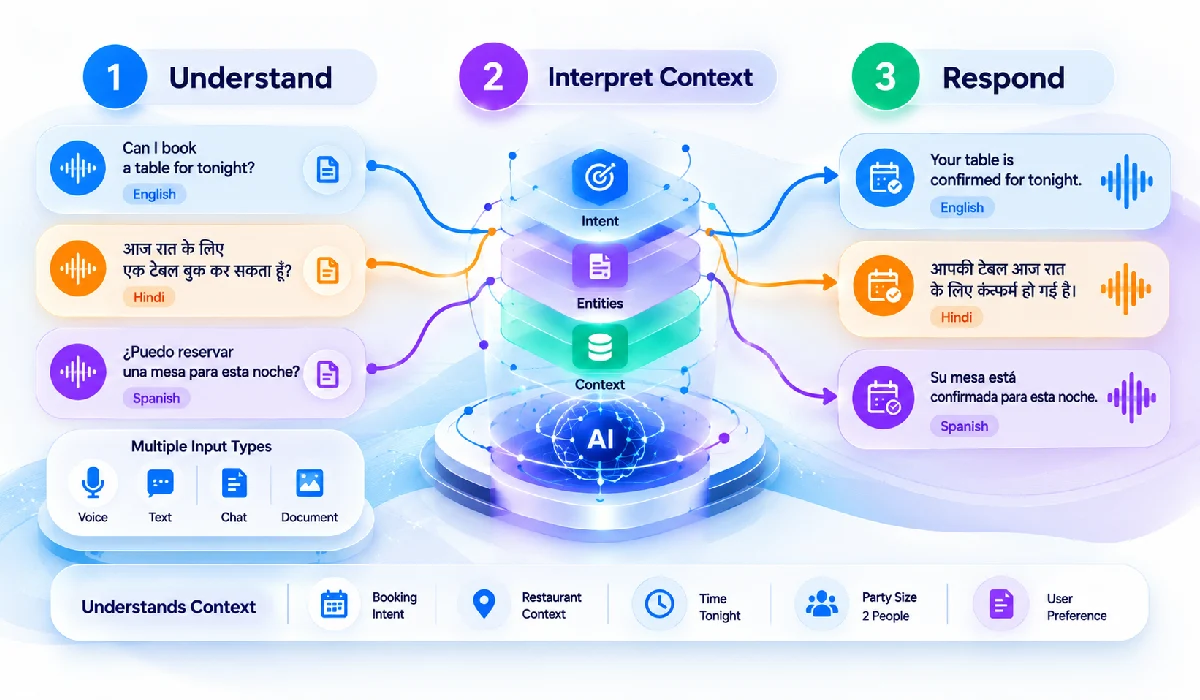
Voice AI Agents for Lead Generation, customer support, appointment scheduling and order management are among the most common commercial deployments for multilingual AI. Healthcare providers use multilingual AI agents to communicate with patients in their preferred language, reducing misunderstandings that affect care outcomes. Financial services organisations deploy them for international client queries. Hospitality and travel businesses use them to handle reservations and service requests from multilingual callers around the clock.
Multilingual AI agents make it possible for businesses to communicate with customers in any supported language, at any scale and without the constraints of staffing or shift patterns. With automatic language detection, NLP-driven interpretation and direct language generation, consistent cross-language customer service becomes an operational standard rather than an exception.
Explore Voice AI vs Traditional Call Centres to see how AI handles multilingual volume and service consistency compared with staffed call centre alternatives.
Bizfusion supports businesses in deploying AI voice and multilingual communication solutions designed for modern customer service operations.
AI agents for multilingual conversations handle thousands of simultaneous interactions, making them well suited to high-volume customer service environments across multiple languages.
AI agents communicate internally using structured data formats and programming protocols that are language-agnostic, separate from the human-facing conversation layer.
Yes. Multilingual AI detects the language you use and responds accordingly, with no manual language selection required.
AI uses natural language processing models trained on multilingual datasets to understand meaning and intent across languages, rather than relying on word-for-word translation.
They are used in customer support, healthcare, banking, hospitality and retail to communicate with users in their preferred language at scale.
Key benefits include wider customer reach, reduced reliance on language-specialist staff, faster response times and consistent service quality across language markets.
Businesses deploy multilingual AI for customer support, appointment scheduling, lead qualification and order management, handling queries in multiple languages around the clock.
Recent Posts